Calcutta (Kolkata)
 St. John’s Church is Calcutta’s first Anglican Cathedral and the third oldest Church in the city. Located at the heart of the city the church contains beautiful paintings, stained glasses and marble memorials. The compound also contains several grave and memorials including the grave of Job Charnock, the controversial founder of the city of Calcutta in 1690. Read more…
 Ronald Ross, a British Physicain working in the small laboratory of the Presidency General (PG) Hospital discovered that malaria was transfered by female anopheles mosquito. Ross received the Nobel Prize in 1902 and a memorial was erected on the western walls of the PG Hospital. Ross’ discovery and his memorial was the focal point of Amitav Ghosh’s novel Calcutta Chromosome. Read more…
3. Raj Bhavan, Calcutta (Kolkata):
 Raj Bhavan, the present residence of the Governor of West Bengal, and the earths-while residence of the viceroy of India was built in 1805 in the lines of the Keddlestone Hall of Derbyshire. Considered as the finest Government House occupied by any sovereign or government in the world. Surrounded by a huge garden is approached by four colossal arched gateways. Read more…
4. Fanush ~ Paper made hot air balloons:
 Fanush, paper made hot air balloon, was once the integral part of North Calcutta (Kolkata) “Babu” Culture. Today the art of Fanush making is a dying art as the new generation has shifted its attention into other sources of entertainment. The Fanush operates in the same principle of a hot air balloon. The air inside the Fanush is heated by a cloth rag ball, attached to the base of the Fanush. The Dutta family of Bholanath Dham still carries out the art of fanush flying on the afternoon of Kali puja. Read more…
5. Chinese Temple of Tiretta Bazar:
 After the daath of Tong Achew, the first Chinese settler of Calcutta. The Chinese moved from Achipur to the centre of Kolkata, where they settled at Tiretta Bazar. Even today Tiretta Bazar has a distinctive Chinese touch and the Chinese breakfast is still available on Sunday mornings. Tiretta Bazar also houses six Chinese Temples, although difficult to spot they are worth a visit. Read more…
 Bengalis have never been a warrior race, and a Bengali fighting a war would be one of the last thing one can imagine. Bengalis are rather dubbed as book worms showing their excellence in academic fields. But in the very heart of Kolkata’s academic hub stands a memorial dedicated to the Bengali warriors killed during World War I. The 49th Bengali Regiment was part of the British army in WWI and was mostly posted in Mesopotamia ( present day Iraq). Read more…
7. Calcutta GPO:
 Located at the site of the old Fort William, Kolkata GPO is located on the crossing of Netaji Subhas Road and Koilaghat Street. General Post Office (GPO) is one of the famous landmark of the city of Calcutta (Kolkata). Built in 1868 the majestic building was designed by Walter B. Grenvile. Along the eastern staircase of the GPO almost invisible brass plate marks the eastern end of the old Fort William, probably the only remains of the old fort of Calcutta. Read more…
8. Chinese New Year:
 The Chinese settlement of Calcutta dates back to to 1780s when a trader named Tong Achew set up his sugar factory near present day Budge-Budge. The place today is known as Achipur, after Tong Achew. The Chinese soon deserted Achipur and headed for Calcutta (Kolkata), where they are presently settled in Tangra & Tiretta Bazar regions. The Calcutta Chinese community celebrates the Chinese New Year in traditional way complete with dragon & lion dances. Read more…
 Writers’ Building is so called because it once housed the clerical and administrative staff (writers) of East India Company. Today it houses the main state secretariat and the office of the Chief Minister. The 150 mts long building occupies the entire nort end of the Lal Dighi (Tank Square). Built in 1777 and the designed by Thomas Lyon the building has undergone several extension and changes over the years. Read more…
10. Synagogues of Calcutta (Kolkata):
 Calcutta (Kolkata) has always been a melting pot of various cultures & religions. Jews were one of the last communities to arrive in Calcutta (Kolkata) but within a short span of time they made their presence felt by controlling a large section of the trade in Calcutta (Kolkata). Once the Jews in Calcutta (Kolkata) numbered 6000 and had an active community complete with Synagogues where various religious rituals were carried out. But the two synagogues, Beth El & Magen David, of Calcutta (Kolakta) still stands. Declared as protected monuments they are looked after by the Archaeological Survey of India (ASI). Read more…
11. Parsi (Zoroastrian Fire Temple):
 Zoroastrianism is a religion based on the teaching of prophet Zoroaster. Founded in the 6th century BC, Zoroastrianism is considered one of the oldest religions of the world. The Parsi first arrived in India well before the birth of Christ and settled in the West Coast of India. About 200 years ago the Parsis first settled in Calcutta (Kolkata). The first Parsi Temple was first set up in 1839 but it was abandoned. The present fire temple of Anjuman Atash Adran was established in 1912 and operates to this day. Read more…
12. Standard Life Assurance Building:

Although lesser known than its famed counterparts of Writers’ Building, General Post Office (GPO), St. Andrew’s Kirk or St. John’s Church the Standard Life Assurance Building can be considered as one of the finest buildings around Lal Dighi (formally Tank Square). Located at the corner of BBD Bagh (South) and Red Cross Place (formally Wellesley Place) the Standard Life Assurance Building was constructed in 1896 by the famous Bombay based architect Frederick W Stevens, of Victoria Terminus (VT) fame. The building once housed the office of Edinburgh based Standard Life Assurance company. Read more…
13. St. James’ Church (Jora Girja), Kolkata (Calcutta):
 Jora Girja, popularly known as a bus – stop on the Lower Circular Road, is actually a twin spired church on the Name St. James’ Church. Built in 1855 by architect Walter B Granville the Ghotic styled church with pointed arches and richly decorated woodwork has recently been restored and open to public on 11 December 2011. Read more…
14. All Souls’ Day, Kolkata (Calcutta):
 All Souls’ Day is a day when Christian remember their friends & relatives, who have passed away. This comes from an ancient belief that the souls of the dead will return, on this particular day, to have a meal with their family & friends. Candles are lit to guide the souls to their home for the meal. In Kolkata All Souls’ Day is celebrated in Lower Circular Road and Bhawanipur Cemetery. Read more…
15. St. Mary’s Church (Bangali Cathedral), Calcutta (Kolkata):
 St. Mary’s Church was constructed in 1889 and is popularly known as the Bangla Cathedral, as large number of its member belong to the Bengali Protestant Christan community. Located on Elgin Road (Lala Lajpat Rai Sarani) the church interiors contain beautiful stained glass and marble tablets, many of which are w
ritten in Bengali. Read more…
16. Metropolitan Building ~ Whitewa, Laidlaw and Co. to Big Bazar:
 On the eastern side of Esplanade stands a spectacular building in Baroque style, complete with domes, pediments, balconies & clock tower. Known as the Metropolitan Building it once housed Calcutta’s (Kolkata’s) leading departmental stores run by the famous Whiteway, Laidlaw and Co. Today the Metropolitan Building is owned by the Life Insurance Corporation of India and the old department store area on the ground floor is now occupied by the Big Bazar. Read More…
17. Scott Kelby’s Worldwide Photowalk, 2012, Calcutta (Kolkata):
 Kelby is editor and publisher of Photoshop User and Layers magazines, president and co-founder of the National Association of Photoshop Professionals (NAPP) and is president of Kelby Media Group, an Oldsmar, Florida-based software training, education, and publishing firm. The Calcutta (Kolkata) edition of the Scott Kelby Worlwide Photowalk was lead by Manjit Singh Hoonjan, a veteran tour and photo guide in the streets of Calcutta (Kolkata). Read more…
18. Bhistis of Calcutta (Kolkata):
 During the British rule the bhistis were known for their loyalty and efficiency and have been made immortal in Rudward Kiplimg’s poem Gungan Din. Once an indispensable part of Calcutta’s (Kolkata’s) water supply of both domestic and public purposes today the bhistis are fast vanishing tribe. Today a handful of bhistis operates in a few pockets in Calcutta (Kolkata). Read more…
19. Nikon School India Photowalk ~ Kolkata (Calcutta):
 The pujas are over and the winter chill has already set in and its ideal time for a photowalk in Calcutta (Kolkata). Nikon School India Kolkata photowalk was scheduled at 6:30 am on the 28 October 2012. The meeting point was Victoria Memorial North Gate. The participants consisted of a interesting mix of photographers, starting from first timers to hard core veterans but each carried a Nikon DSLR, starting from low end and out of by Fun2Save” href=”#40929935″> market
 models like D60 to the latest high end models of D800. Read more…
20. Fanush Making ~ Making of paper made hot air balloons:
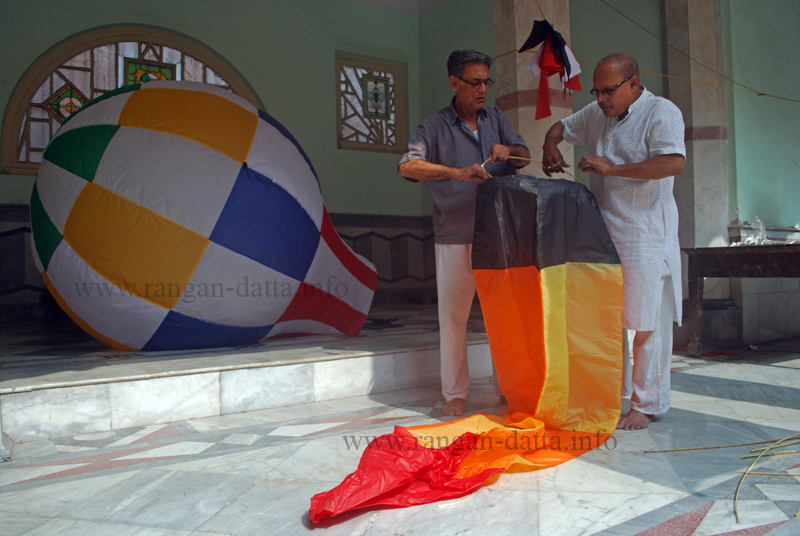 The Fanush operates in the same principle of a hot air balloon. The air inside the Fanush is heated by a cloth rag ball (locally called Luti) soaked in spirit. The Luti is attached to the base of the Fanush. The Dutts of Bholanath Dham on Beadon Street have kept the tradition alive by flying several different fanushes every year on the afternoon of Kali Puja. In 2012 I was specially invited by Ajoy Dutt to document the entire process of fanush making. Read more…
21. Myanmar (Burma) Buddhist Temple, Kolkata (Calcutta):
 Mentioned by Amitava Ghosh in his best selling novel The Glass Palace the Maynmar (Burma) Buddhist Temple is located on 10 A Eden Hospital Road, next to the horse mounted statue of Rana Pratap, just off the Central Avenue. The two boards on the no descriptive three storied building are the only evidence of the Myanmar (Burma) Buddhist Temple in Kolkata (Calcutta). Read more …
22. Calcutta (Kolkata) Churches:
 Kolkata (formally Calcutta) once the second city of the mighty British Empire is home to several churches catering to different sects and sub – sects of Christianity. Apart from the well known Protestant and Catholic sects Calcutta (Kolkata) also houses churches belonging to the Orthodox sect including Armenian, Syrian and Greek orthodox sub – sets. This article is a compilation of the the Churches of Calcutta (Kolkata). However the article is not exhaustive and would be updated from time to time. Read more…
23. Armenian Christmas Celebration, Calcutta:
 According to historic records Christians worldwide celebrated Christ’s birth on January 6, till the fourth century. The Roman Catholic Church changed the birth date to December 25 to override a pagan festival dedicated to the birth of the sun. The Armenian Church just kept the original date. Also Armenia happens to be the first country to adopt Christianity as the state religion. Read more…
24. North Park Street Cemetery ~ Lone surviving grave:
 Tucked away in the South – Eastern corner of the the Assembly of God Church Tower (AG Tower) complex is a strange circular structure. Supported by six Ionic pillar and crowned with a dome. It is often used for drying clothes and even as a storage space. The structure known as the Roberson Monument is the lone surviving grave of the demolished North Park Street Cemetery. The Mallick Bazar entrance of the Mother Teresa Sarani (formally Park Street and even formally Burial Ground Street) once housed cemeteries on its both side. The cemeteries on the Northern side of Park Street have long been demolished to give space to the ever expanding city of Calcutta (Kolkata) Read more…
25. Lascar War Memorial, Kolkata (Calcutta):
 In Napier Road in Hasting region of Calcutta (Kolkata) stands a towering structure built in the honor of 896 Lascars, who died fighting for the British Navy during the Great War of 1914 – 18 (First World War). The 100 ft memorial built in the Indo-Mughal style has prows of an ancient galley projecting from each side and is capped by four mini minarets and a large dome. Along the facade are undulating lines symbolizing waves. Read more…
26. Greek Orthodox Church, Calcutta (Kolkata):
 The Greek Orthodox Church, looks more like a Greek Temple than a church, with its four Doric columns in the portico supporting the giant triangular pediment. The smart whitewashed facade the Greek Orthodox Greek church stands out amidst the chaos of Kalighat. Although the Greek Orthodox Church has an antique look but it is among the newest of the Calcutta (Kolkata) Churches and was constructed only in 1925. Read more…
27. Portuguese Church, Catholic Cathedral of Calcutta (Kolkata):
 Built in typical Catholic style the Portuguese Church comes in with twin towers which are shaped more like marinates, topped with crowned shaped cupolas. The extended portico is crowned with a triangular pediment decorated with beautiful relief work. The inside is even more spectacular with long corridor leading to beautifully decorated alterflanked with intricately decorated circular stained glass windows. Read more…
28. Second Wikipedia Kolkata Photowalk:
 Wikipedia the world largest online encyclopedia runs on entirely voluntary effort. Each major city in the world has a a Wikipedia chapter, who apart from contributing to Wikipedia carry out different activities like Wikiacademy and photowalks. The main objective of Wikipedia Photowalk, officially known a “Wikipedia Takes,” is to build a database of photos of landmarks of the city. The photos can later be used in the relevant articles. Read more…
29. Armenian Good Friday, Calcutta (Kolkata):
 The coffin bearers slowly carried the black coffin, beautifully stacked with flowers outside the small chapel adjoining to the Lower Circular Road Cemetery in Calcutta (Kolkata). Strangely it was not a funeral and nor the black coffin contained any dead body !!!! It was the Good Friday service of the Armenian Christian community at the St. Gregory, the Illuminator Armenian Chapel at Park Circus. Read more …
30. First World War (WWI) Memorial, Calcutta (Kolkata):
 From fallen soldiers of different regiments to innocent victims of mass genocide, Calcutta (Kolkata) houses several memorials in memory of the martyrs of the Great War of 1914 – 18 (World War I). From well known, strategically located towering memorials of British and Anglo Indian soldiers to small, obscure, hidden memorials dedicated to unknown regiments. Calcutta’s (Kolkata’s) First World War (WWI) Memorials not only covers a wide range of forgotten regiments and unknown communities but also a diversified architectural style. Read more…
31. Toong On Church, Rebirth of a Chinese Church:
 Set up in 1924 the Nanking Restaurant is considered as the oldest Chinese restaurant in Calcutta (Kolkata) and probably in the whole of India. But unknown to many the gorgeous Nanking Restaurant housed an equally gorgeous temple in its first floor. The temple dedicated to the warrior god Kwan Ti was beautifully decorated with antique furniture and a sets of weaponry. It has been decades Nanking has closed its doors and a court dispute have kept the building under lock and key. Today largely due to the initiative of Calcutta Chinese of Tiretta Bazar the Toong On Church has opened its doors again. Read more…
32. Armenian Genocide Day, Calcutta:
 The Armenian Genocide also known as the Armenian Holocaust, the Armenian Massacres and, traditionally among Armenians, as the Great Crime was the Ottoman government’s systematic extermination of its minority Armenian subjects from their historic homeland in the territory constituting the present-day Republic of Turkey. Armenians all over the world observes 24 April as the Armenian Genocide Remembrance day. Calcutta (Kolkata), housing a Armenian community for over three hundred years, is no exception. Read more…
33. Jane’s Walk 2013, East Calcutta Wetlands:
 Jane Jacobs saw cities as integrated systems that had their own logic and dynamism which would change over time according to how they were used. With a keen eye for detail, she wrote eloquently about sidewalks, parks, retail design and self-organization. Jane’s Walks are held annually during the first weekend in May. The 2013 Calcutta (Kolkata) edition of the Jane’s Walk was organised by The Telegraph Explore Calcutta Walks, in association with Calcutta Walks and was presented by Prabha Khaitan Foundation. Nine walks was held in Calcutta (Kolkata).” I joined the East Calcutta Wetland walk. Read more…
34. Old or Mission Church. Calcutta (Kolkata):
 Founded by the Swedish Lutheran missionary Johann Zachariah Kiernander the Mission Church was founded in 1770 and happens to be the oldest Protestant Church in Calcutta (Kolkata) and the second oldest (only next to Armenian Church) in the city. The church was completed in 1770. Kiernander himself called the church Beth Tephillah (Hebrew: House of Prayer).But the church was popularly known as the Mission Church and locals called it the Lal Girja, literally meaning the Red Church, because of its brick red finish. Read more…
35. Glorious Dead Cenotaph, Calcutta (Kolkata):
 Located on the Northern end of the Calcutta (Kolkata) Maidan the Glorious Dead Cenotaph is the most well known of the WWI Memorials of Calcutta (Kolkata). Strangely the memorial contains no plaques and commonly and erroneously known as the “Memorial of Unknown Soldiers.” But it once contained plaques with the names of the fallen soldiers, which were later removed to the St. John’s Church. It actually commemorates those Calcutta British and Anglo Indians who gave their lives for King and Country during the First World War. Built in 1924 and designed by architect Herbert William Palliser, the sandstone built memorial loosely resembles the Cenotaph of Whitehall. London. Read more…
36. Chinese Breakfast, Old Chinatown (Tiretta Bazar), Calcutta (Kolkata):
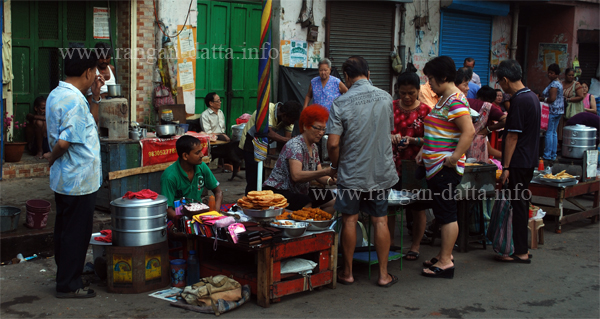 Its early Sunday morning and sun is yet to come out, but the stoves are already fired up and the morning silence is broken by the sound of the knife hitting the chopping plate. Night owls crawl out of their late night parties and call centre night shifts to rejuvenate themselves with bowls of hot fish ball soups from the road side vendors. Hungry soles huddle around makeshift stall, jostling with each other to grab the day’s first meal.Yes, its breakfast time, Chinatown Calcutta !!!! Read more…
37. Hsuan Tsang Monastery, Paschim Chowbaga, Calcutta (Kolkata):
 Located in the Tiljala region on the Eastern outskirts of Calcutta (Kolkata) the Hsuan Tsang Monastery at Paschim Chowbaga is definitely is one of Calcutta’s (Kolkata’s) best kept secrets. The monastery was started by Chien Wu in 1968 and doubled up as a lama training centre. The Moanastery was constructed in stages over the years and still continues to expand. Read more…
38. Choong Ye Thong Chinese Church (Temple), Calcutta (Kolkata):
 Located behind the Hindustan Building is a white coloured building housing a small Chinese Church (Temple) on its top floor. Known as Choong Ye Thong Chinese Church (Temple) it dates back to 1935. The small and elegant chapel houses two Chinese deities placed in glass boxes. Beautiful Chinese calligraphy also adds to the grandeur of the chapel. Read more…
39. Eid – ul – Fitr Namaz (Prayer), Kolkata:
 Eid – ul – Fitr, also known as the “Feast of Breaking the Fast” is an important Islamic festival celebrated by Muslims worldwide to mark the end of Ramadan, the Islamic holy month of fasting. This is a day when Muslims around the world try to show a common goal of unity. The Eid prayer is performed in congregation in open areas like fields, community centers, etc. or at mosques. In Kolkata (Calcutta) the eid prayer is held at a number of places. The greatest spectacle happens in Nakhoda Masjid and Red Road. Read more…
40. Chinese Hungry Ghost Festival, Choong Ye Thong Cemetery, Tangra, Calcutta:
 The 15th day of the Ghost Month (which is a full moon day) is the Ghost Festival, sometimes called Hungry Ghost Festival. This is the day when the spirits are in high gear. It’s important to give them a sumptuous feast, to please them and to bring luck to the family. In 2013 the Chinese Hungry Ghost Day was scheduled on 20 Aug. The Chinese of Calcutta (Kolkata) scheduled the celebration according to their own convenience. The Lees of the Choong Ye Thong club celebrated the day on 11 Aug at the Choong Ye Thong Cemetery. Read more…
41. Chinese Moon Cake, Tiretta Bazar (Old Chinatown), Calcutta (Kolkata):
 Basically a harvest festival the Chinese moon Festival is celebrate on the 15th day of the eight month and falls on a full moon day. The festival is for lunar worship and moon watching, when moon cakes are regarded as an indispensable delicacy. Moon cakes are offered between friends or on family gatherings while celebrating the festival.The moon cakes comes with a wide variety of rich filling, consisting of lotus seed and sweet bean paste. The exotic one contains a whole egg yolk, representing the moon while some contains two egg yolks signifying the two phases of the moon. Read more…
42. Bandel Cheese:
 Small discs of about a inch in diameter, they come in white and brown colours, they are the Bandel cheese and are available only in a couple of shops in Calcutta’s not so new New by Fun2Save” href=”#16816454″> Market !!!!! Originating from the erstwhile Portuguese settlement of Bandel (about 50 km north of Calcutta) the Bandel Cheese is perhaps the last traces of Portuguese cuisine in Bengal. Available in plain and smoked version the Bandel Cheese is made from cow’s milk. Read more…
43. Scott Kelby’s Worldwide Photowalk 2013, Calcutta (Kolkata):
 Scott Kelby is editor and publisher of Photoshop User and Layers magazines, president and co-founder of the National Association of Photoshop Professionals (NAPP) and is president of Kelby Media Group, an Oldsmar, Florida-based software training, education, and publishing firm. The Calcutta (Kolkata) edition of the Scott Kelby Worlwide Photowalk 2013 was lead by Manjit Singh Hoonjan, a veteran tour and photo guide in the streets of North Calcutta (Kolkata) along the banks of the river Hooghly. Read more…
44. Sutli Kabab or Suta Kabab:
 Its really a melt in the mouth experience!!! kababs so soft that it needs to be tied around the skewer with threads, and hence the name Sutli kabab or Suta Kabab. Available in the Adam’s Kabab Shop in the Phears Lane and is just a couple of minutes walk from the Central metro station. Unlike the seikh kabab, which stays on the skewer, the sutli or suta kabab disintegrates unless tied together with a thread, hence the name Sutli or Suta Kabab. Read more…
45. Walkability study of Calcutta (Kolkata) Maidan:
 It was a story of red and green frames, green was for thumbs up or like while red was for thumbs down or dislike. Sounds easy, not exactly!!! About a dozens Calcuttans, along with a couple of foreigners, struggled to decide what to like and dislike in their very own backward. An initiative of Jane’s Walk, the walkability study of Maidan was organised by Calcutta Walks, a city based walk tour operator. Read more…
46. Lawn Bowls, RCGC Maidan Pavalion, Calcutta (Kolkata):
 Lawn Bowls is version of the game of Bowling, and is played on well manicured lawns. The origin of lawn Bowls date back to the 13th century in England and it is being played in Calcutta (Kolkata) for more than 150 years. Introduced by the British in the Royal Calcutta Golf Club (RCGC) it is now played in the Maidan Pavalion of RCGC. The objective of the game is to get the woods (big balls) closest to the jack (small white / yellow ball). Read more…
47. McDonnell Monument, Forgotten Drinking Fountain:
 Located opposite the Calcutta (Kolkata) High Court and inside the complex of West Bengal Legislative Assembly is a spectacular drinking fountain. This small but elegant structure is actual a memorial dedicated to William Fraser McDonnell. William Fraser McDonnell, V.C., of Bengal Civil Service (1850 – 1886) and Puisne Judge of the High Court (1874 – 1886). McDonnell was the repentant of the Victoria Cross and was one of the four civilians to win the prestigious gallantry award, awarded for bravery in combat situation. Read more…
48. Third Wikipedia Kolkata Photowalk:
 Wikipedia the world largest online encyclopedia runs entirely on voluntary effort. Each major city in the world has a a Wikipedia chapter, who apart from contributing to Wikipedia carry out different activities like Wikiacademy and photowalks. The Third edition of the Wikipedia Kolkata Photowalk, oficially known as the Wikipedia Takes Kolkata 3, was held on 23 Feb 2014 and was focused on North Kolkata. Read more…
49. The Telegraph Huntage 2014:
 A two to four member team, a car and a leaflet with clues for eight heritage sites in Calcutta (Kolkata). The team that reached the most spots within a specified time would win. Sounds easy, not exactly… Thirteen heritage spots were selected and each team had to visit the allocated eight spots, following five different routes. To make it more complex, each spot had two sets of clues, thus making it a total of ten combinations. So it was not as easy as it sounded!!! Only 7 teams out of the 102 participating teams could crack all the 8 clues. Read more…
50. Cross Cultural Communication with Kolkata Chinese:
 Wendy Lu an undergraduate student of Media Studies in Fu Jen Catholic University in Taiwan presented a paper on my cross cultural communication with the Kolkata Chinese. I had the pleasure of meeting Wendy Lu at the Choonge Ye Thong Cemetery at Tangra (Old Chinatown). Wendy was in Kolkata on a 21 day educational tour. Read more…
51. Paresh Lal Roy, Father of Indian Boxing:
 Paresh Lal Roy (P L Roy) was an armature boxer and credited for popularizing the sport of Boxing among Indian youths. P L Roy was educated in England and picked up boxing at St. Paul’s School in London and was coached by Billy Childs. He went on to do a MA from Cambridge University and won the inter University Championship. P L Roy had the distinction of being the first Cambridge Blue from Asia. He returned to India in 1920s and joined the East India Railway (now Eastern Railway) as a traffic superintendent and was soon promoted to sports officer of the railway board. Read more…
52. Sunday Service at Holy Trinity Armenian Church, Tangra, Kolkata:
 Tangra, Calcutta’s (Kolkata’s) Chinatown known for its tanneries and Chinese restaurant is also the home of the Armenian Church of Holy Trinity. The Holy Trinity Armenian Church in Tangra was inaugurated on 1st March 1867. It has an adjoining graveyard and the oldest grave dates back to 19th March 1867. It was only in 2007 the Armenian community of Calcutta (Kolkata) took up the initiative by restoring the Holy Trinity Church at Tangra. Since then regular masses have been held in the Holy Trinity Armenian Church and the the graveyard and the compound well maintained. Read more…
53. Chinese Cemeteries of Tangra, New Chinatown, Kolkata (Calcutta):
 The Chinese settlement of Calcutta dates back to the late 18th century when a Chinese trader, Tong Achew settled near present day Budge Budge. Tangra, Kolkata’s new Chinatown, is known for its sparkling Chinese Restaurants but hidden in Tangra are six Chinese Cemeteries belonging to the same six clubs of Kolkata Chinese Community. The cemeteries are scattered over a large area, they are located inside a complex maze of lanes and by-lanes, making it extremely difficult to spot. Read more…
54. Clive House, Dum Dum, Oldest Building in Kolkata:
 Although named after Robert Clive, Clive House, in Dum Dum, predates the man, who helped to establish the British rule in India. The origin of the Clive House, also known as Burra Kothi, still remains a mystery. Some believe it to be a Portuguese or a Dutch Factory. According to local legend, the mound on which the Clive House stands was built in a single night. Locals believe that the grounds and the house are haunted. In 2003 it was taken over by the Archaeological Survey of India (ASI) and declared a protected monument. Read more…
55. Calcutta version of Calcutta Cup:
 All though it may sound strange but Calcutta Cup is a trophy awarded , since 1879, to the winner of the rugby match played between England and Scotland, played alternatively in London and Edinburgh. Although not played in Calcutta, the Calcutta Cup has a Calcutta origin. It was in 1872 the first ever rugby match took place in Calcutta. Soon Calcutta caught on with the rugby enthusiasm, which led to the formation of the first Rugby club in India in 1874 and was named Calcutta Football Club. Sadly within four years the Calcutta Football Club decided to wind up and a strange decision was made with the remaining club funds. The entire remaining funds of the club were withdrawn in the form of silver coins which were melted and re-casted into a beautiful trophy, the Calcutta Cup. Read more…
56. Blessing of the Grapes, Holy Trinity Armenian Church, Tangra:
 Held on the Sunday closest to the 15th August, the Grape Blessing Ceremony is one of the most important festivals of the Armenian calender. Although a Christian festival the Blessing of the Grapes originally dates back to the days of Paganism. With Armenia adopting Christianity as the official religion in 301 AD (the first country to do so) the ancient pagan custom of blessing the grapes were absorbed into the folds of the Armenian Church. Today the blessing of the grapes would turn out to be one of the major feast days of the Armenian Church and came to known as the “Assumption of the Virgin Mary.” Read more…
57. A Panoramic Tour of Kolkata (Calcutta):
 Panoramic photography is a technique of photography, using specialized equipment or software, that captures images with elongated fields of view. It is sometimes known as wide format photography. Panorama photos are normally shot by stitching series of photos with sightly overlapping fields to create a panoramic image. The series contains panoramic photos consisting of the Kolkata Maidan, Salt lake (sec V) and Rajarhat (Newtown) and the Jain Temple of Gouribari. Read more…
58. Neveh Shalome Synagogue, Rebirth of Kolkata’s (Calcuta’s) Oldest Synagogue:
 Neveh Shalome Synagogue (also Called Neveh Shalom Synagogue), the first Calcutta (Kolkata) Synagogue was built in 1831. Initially it was just a simple prayer hall. The old Neveh Shalome Synagogue was demolished in 1884 to give way to the magnificent Magen David Synagogue, but in 1910 the Jews of Calcutta 9kolkata) decided to rebuilt the Neveh Shalome Synagogue in the vacant plot in the Magen David Synagogue complex. The Neveh Shalom Synagogue was restored in 2014. Read more…
59. Jewish Cemetery, Kolkata (Calcutta):
 The Jewish Cemetery in Kolkata (Calcutta) was set up in 1812. It is located on 45 Narekeldanga Main Road and right on the Phoolbagan crossing. According to legend Shalom Cohen got the land from a Bengali friend in exchange of his gold ring. Today the cemetery is still active and contains hundreds of grave but the most interesting structure in the Jewish Cemetery is the geniza. Genezia, is a storage house for abandoned Jewish religious document. Read more…
60. Radhanath Temple, Chetla – Tolygunge Area:
 Built by the Bawali Mondal family in 1809 the 90 feet high Radhanath Temple towers above the box like apartments of the Chetla – Tollygung area. Built in naba – ratna style the temple complex also houses a massive flat roofed nat mandir. The Radhanath Temple is located in the Mondal Temple Lane and very near to the Tolly Nala (Adi Ganga). Read more…
61. Afghan War Memorial, Dum Dum:
 Located next to the Dum Dum Ordinance Factory is the Afghan War Memorial. The tall white tower is dedicated to the fallen British soldiers during the First Anglo – Afghan War (1839 – 42). The First Anglo Afghan War, also known as Auckland’s Folly, was fought between British India and Afghanistan. It marked the beginning of the competition of power and influence in Central Asia and later on came to be known as the Great game. British lost nearly 20,000 troops in this war. The surviving forces of that fruitless campaign erected a memorial in the memory of their dead fellows at Dum Dum in 1842 known as Afghan War memorial. Read more…
62. Choto Ras Bari, Tollygunge Cheta area:
 The elaborate temple complex of the Choto Ras Bari is located in the Tollygunge – Chetla area of South Kolkata. It is located on the banks of the Adi Ganga (Tolly Nala) and behind the Tollygunge bazar. The main tyemple in the complex is built in Naba ratna style and is dedicated to Gopal Ji. There are two other pancharatna temple in the complex along with 12 aat chala temples. Read more…
63. Happy Street, Park Street, Kolkata:
 Happy Street is an initiative of Times of India, where portion of the Park Street and a few adjoining roads were blocked to vehicular traffic for four Sundays mornings during the month of February and March 2015. Citizen of Kolkata took part in various activities like cycling, roller skating, skate boarding, yoga, football, cricket, boxing, etc. Read more…
 Chitpur Local is a name of a project aimed at reviving the Chitpur area, which is considered as the one oldest neighborhood of Kolkata (Calcutta). The Chitpur locality is the hub of Jatra(traditional thearte), print making & publishing, jewellery making and several other cultural activities. The Chitpur Local aims at bringing together the artists, local students, teachers, shop owners and residents and recreate the long forgotten heritage. Chitpur Local Photowalk was part of the project and was organized by Calcutta Walks. Read more…
65. Seven Church Walk, Good Firday:
 The roots of the seven church walk dates back to 16th century Rome, when St. Philip Neri and his friends would visit the seven Basilicas (four major and three minor) of Rome. Today the lenten tradition is part of the Good Friday rituals for Roman Catholic Christians all over the world. Calcutta (Kolkata) is no exception and seven church walk is an integral part of the Good Friday morning rituals in the city. Read more…
66. Carmelite Convent, Outram Street:
 The Order of the Brothers of Our Lady of Mount Carmel or Carmelites or Carmel is a Roman Catholic order probably founded in 12th century on Mount Carmel, in present day Israel. The history of the Carmelite Convent on Outram Street, near Park Street, dates back 1929, when the Archbishop of Calcutta, Monsignor Perier, invited the Carmel Sisters, from Belgium, to set up a Carmelite Convent in Calcutta. Read more…
67. Maniktala Christian Cemetery:
 Overgrown with tall grasses & bushes, infested with dogs and a few unimpressive scattered graves is the best way of describing the Maniktala Christian Cemetery. The Cemetery itself is difficult to spot and even people living in the neighborhood are totally unaware of its existence. Located behind the Leprosy Mission Hospital it is approached through a small gate next to the hospital. On the north – eastern corner of the Maniktala Christian Cemetery lies the family grave of the Rambagan Dutt Family and contained the grave of Toru Dutt the first Indian women to write proses and poetry in both English and French. Read more…
68. Ramzan (Ramadan) Food Street, Nakhoda Masjid, Zakaria Street:
 During the holy month of Ramadan, the Muslims fast from sun rise to sun set. Every afternoon during the month of Ramadan, The entire region surrounding the Nakhoda Masjid turns out a food street feeding hungry souls, who are not on fast.The spread consists of a various assortment of kababs along with a host of different kinds of haleem. The spread also consists of fried fish and chicken and not to forget the delicious desserts. Read more…
69. Calcutta Times, Passion Club, Heritage Walk:
 The first heritage walk of Calcutta Times, Passion Club, Heritage was scheduled on 6 Sept, 2015 and was known as the Confluence of Culture and focused on the ethnic minority groups of Calcutta. The walk was lead by Jay Saraogi covered places like the Bow Barracks, Parsi Fire Temple, Chinese Breakfast and Chinese Temples, Beth El, Magen David and Naveh Shalome Synagogue, Armenian Church and Portuguese Church. Read more…
70. Berger Express Painting Indiblogger Meet, Kolkata:
 Finally on 12 September 4:00 pm at the Ball Room of Oberoi Grand Hotel in Kolktta the wait was finally over. The Berger Express Painting IndiBlogger Meet was a welcome relief for the Bloggers from Kolkata. The last major IndiBlogger Meet happened about four and half years ago in Kolkata, just a few months before I entered into the world of blogging. So it was my first IndiBlogger Meet and obviously I was super excited. Read more…
71. Ghost walk of Esplanade and Dalhousie Square, Kolkata:
 It was the sound of piano, isolated notes and then a complete string of music, then the loud dong of the St, John’s Church bell announcing 1:45 am, this was all part of the Ghost walk of Esplanade and Dalhousie area in Calcuta. The idea of a ghost walk of Calcutta was conceived by my friend Anthony Khatchaturian, a Calcutta Armenian of the famous Galstaun lineage, along with Dr. Souvik Mukherjee of Presidency University. The route was soon chalked out and the Anthony did all the running and arranged for permissions and police escorts. Read more…
72. Voice of Chinese – India Hostage of Deoli Camp, India – China War 1962:
 The Sino – India War lasted just a month (20 Oct – 21 Nov 1962) but the ordeal of the Chinese origin Indian continued over four years. Just after the India – China war thousand of Chinese origin Indians, who have been living in India for generation and for centuries, were horded up in trains and were sent to a concentration camp in Deoli in Rajasthan. Recently these Indian Chinese in Canada and USA have come together to put forward their story to the rest of the world. Read more…
73. Plaque of the last legal sutte (sati) of Brngal:
 In 1829 he lighted the one pyre of his dead father and living mother, the last legal suttee (sati) of Bengal. The plaque in memory of The Rev. Bipro Charan Chuckerbutty, who lighted the pyre of the last legal sati of Bengal, stands on the walls of the Assembly Hall of Scottish Church College, in North Kolkata. The assembly hall on the ground floor of Scottish Church College houses several other plaques dedicated for men for their services to the college. A marble bust of Alexander Duff, the first first missionary of the Church of Scotland and the founder of the college, stands on a wooden pedestal in the assembly hall. Read more…
74. Indian Navy Band in Concert 2015 and Fighting for Peace, Laskar Memorial:
 It was the Indian Navy Band in Concert 2015 along with the cultural programme Fighting for Peace at the historical Lascar Memorial Complex in Hastings, Kolkata. The Lascar Memorial is a 100 ft high memorial built in the honour of the 896 Lascars, who died fighting for the British Navy during the First World War (WWI). One of the pioneering Bands of Indian Navy, the Eastern Naval Command (ENC) Band was commissioned in the early 1950s. It is based in Vaizag (Visakhapatnam) and have performed in all major cities of the country as well as abroad. Read more…
75. Australian Rules Football, Australian Football League (AFL) India, Kolkata:
 Australian Rules Football, the most popular sprts in Australia, was introduced in India by the firmer Australian crickter Ricky Ponting in 2008. The game is played in a oval field with a oval shaped ball, something similar to rugby. Although played with the same type of ball the Australian Rules Football differs considerably from rugby. The fourth national championship, known as the Australain Football league (AFL) India, was held at the Gitanjali Stadium, Kolkata on November 2015. Read more…
76. Sachin Mukherjee’s Fanush and Fanush Makers Get Together:

The century old custom of fanush flying, paper made hot air balloons, is an integral part of North Kolkata babu culture. Fanush was probably first introduced in Kolkata by Gouri Shankar De of Darjipara in 1912. The mathematics teacher of Scottish Church College perfected the art of fanush making. The Fanush operates in the same principle of a hot air balloon. The air inside the Fanush is heated by a cloth rag ball (locally called Luti) soaked in spirit. The Luti is attached to the base of the Fanush. Read more…
77. Gas Crematorium, Crematorium Street:

At first glance it may appear to be a small church, complete with a bell tower, red titled roof, a projected porch, long flight of stairs and pointed Gothic arches. A common sight in small towns of Europe. But the building is located in the heart of Kolkata, next to the Lower Circular Cemetery and is approachable from both Mullick Bazar and Park Circus. Started in 1906, the gas operated crematorium was the first substitute for open wooden cremation pyres in the whole of India. Read more…
78. Navy Cup and INS Hooghly Cup Horse Race:

Equestrian sports and horse racing has been an integral part of Kolkata’s culture for centuries. During the winter races are held in Race Course located at the southern end of Kolkata Maidan. The Navy’s association with Royal Calcutta Turf Club (RCTC) goes back to more than four decades when the formal institutionalisation of dedicated races became the norm. The Navy has been endorsing two prestigious races at RCTC, Kolkata namely the Navy Cupand the INS Hooghly Cup. The Navy Cup was presented to the RCTC by Admiral S N Kohli, PVSM, Chief of Naval Staff on 22 December 1974. The INS Hooghly Cup was instituted in 1994 on the 40th anniversary of the Naval establishment at Kolkata. Read more…
79. Remembrance Sunday, St. John’s Church:

The First World War (WWI), which was the known as the Great War of 1914 – 18, ended on 11 November 1918 (11/11/18). A year later in 1919 King George V inaugurated the first commemoration end of the Great War of 1914 – 18, which was subsequently observed by all Commonwealth Nations.Since then the second Sunday of November is observed as the Remembrance Day or the Remembrance Sunday throughout the commonwealth. In the morning services are held at the Glorious Dead Cenotaph in the Maidan, while the memorial services are held in the St. John’s Church in the evening. Read more…
80. Appejay Kolkata Literary Fest, Literally Heritage Walk:

The 7th edition of Apeejay Kolkata Literary Fest (AKLF) kicked off with a Literary Heritage Walk of College Street area on 10 Jan. 2016. The walk was organized by the Streets of Calcutta (SOC) and I was privileged enough to lead this walk. The walk started on 9:30 am from in front of the iconic College Street Coffee House, housed in the historic Albert Hall. Read more…
81. The Telegraph Huntage 2015, Decoding Calcutta’s Heritage:
 A two to four member team, a car and a leaflet with clues for eight heritage sites in Calcutta (Kolkata). The team that reached the most spots within a specified time would win. Sounds easy, not exactly… Fourteen heritage spots were selected and each team had to visit the allocated seven spots, following five different routes. To make it more complex, each spot had two sets of clues, thus making it a total of ten combinations. Read more…
82. Metiabruz Walk, in the footsteps of Wajid Ali Shah:
 On 13 May 1856 a steamer, name McLeod, docked at the Bichali Ghat in Metibruz, in the southern fringes of Calcutta (now Kolkata). On board was the disposed king of Oudh (or Awadh) Wajid Ali Shah. Little did he know that he would never return to his capital Lucknow and it started the beginning of a home in exile. Wajid Ali Shah left Lucknow but Lucknow never left him, ne transformed the Metiabruz area into a mini Lucknow or chota Lucknow. Read more…
83. Heritage Tour of The Lalit Great Eastern Hotel:
 Started in 1840 as the Auckland Hotel it was renamed as the Great Eastern Hotel in 1865. It was the “Jewel of the East” and the best hotel east of Suez. It long list of esteemed guest included members of the Royalty and celebrities from round the world, including Queen Elizabeth II, Mahatma Gandhi, Ho Chi Min, Rudyard Kipling and Mark Twain. It closed down in 2015 after 165 years of continuous operation, the longest by any hotel, any where in the world. It was reopened in 2013 as The Lalit Great Eastern Hotel, and can be best explored by a guided walking tour of the hotel. Read more…
84. Buddha Purnima Celebration at Fo Guang Shan Monastery, Tangra:
 Fo Guang Shan Monastery in Tangra (New Chinatown), Kolkata, was founded in 1998 by Buddha Light International, a Taiwan based organization. today there are 200 + Fo Guang Shan Monasteries spread all over the world. Fo Guang Shan Monastery in Tangra, Kolkata holds puja on every new moon and full moon day, which coincides with the first and fifteenth day of the lunar month of Chinese calendar. Read more…
85. Tea Testing session with Goodricke:
 The evolution of tea definitely an interesting story, but the story of transforming the two leaves and a bud of the tea plant into a cup of tea is no less interesting. Sadly most of the die hard tea lovers, including me, are not aware of this amazing transformation process. An invitation for a tea tasting session from Goodricke provided me with the great opportunity to unravel the secrets of not only tea tasting but also of tea processing. Read more…
86. Nipponzan Myohoji (Japanese) Buddhist Temple:
 The Nipponzan Myohoji Buddhist Temple, which is popularly known as the Japanese Buddhist Temple, is one of the most beautiful and well maintained Buddhist Temples of Kolkata. The temple was founded by Nichidatsu Fujii in 1935. The Japanese Buddhist Temple consists of a two tiered milk white structure with golden boarders and is crowned with a stupa. At the corner of each tier there are similar smaller stupas. Inside is a marble idol of seated Buddha and the altar is richly decorated with colourful fabrics and brass lamps. Read more…
87. Boat Museum, Ambedkar Bhawan, Kankurgachh:
 The Boat Museum, the only one in its kind in the whole of India, is located at the Ambedkar Bhawan, Kankurgachhi, Kolkata.The Boat Museum was inaugurated in Jan. 2014. Boats have been an integral part of Bengal history and culture. The Heritage Boats of Bengal is a humble venture of the Department of Backward Classes, West Bengal, which lead to the foundation of the Boat Museum. The Boat Museum contains 46 scale models of boats and ships dating back to the days of Indus Valley Civilization and covering areas from Kerala, Tamil Nadu, West Bengal and Bangladesh. Read more…
88. Suriname Memorial, Balu Ghat, Metiabruz & Garden Reach:
 Suriname Memorial, a small non – descriptive memorial, on the banks of Hooghly River in Metiabruz and Garden Reach area was unveiled by the Union External Minister Sushma Swaraj on 7 Oct. 2015. The Suriname Memorial may be new but India’s relationship with Suriname dates back to over almost 150 years. A joint initiative of India and Suriname government the memorial is built in honour of those Indian contract workers who migrated to Suriname, the small country located on the northeast Atlantic coast of South America, from 1873 to 1916. Read more…
89. St. Stephen’s Church, Kidderpore:
 The St. Stephen’s Church, located on the Diamond Harbour Road, and next to the St. Thomas School, it is best observed from the bridge over Adi Ganga (Tolly Nala) in Kiddrpore. With its unique rocket like steeple the St. Stephen’s Church attracts the attention of even the casual passerby. Strangely the steeple was not meant to be designed like a rocket, in fact it was designed as a ship’s lantern. With the Kidderpore ports just a stone throw away no wonder the church had a steeple shaped as a ships lantern and the area was one thronged with seafaring people from all over the world. Read more…
90. 83rd All India ans South Asia Rugby Tournament, CCFC, Kolkata:
 Christmas Day 1872, Calcutta witnessed a strange spectacle, the first official rugby match of the country was played on that day between England and a combined team of Scotland, Welsh and Ireland. 144 years later, on 21 September 2016, rugby in India reached another milestone and theCalcutta Cricket & Football Club (CCFC) witnessed the first ever official women’s XVs Rugby match in the country. It was not a single match but a tournament of national level and part of 83rd All India ans South Asia Rugby Tournament. Read more…
91. Bengali Literary Heritage Bus Tour, Apeejay Bangla Sahitya Utsav 2016:
 The second edition of the Apeejay Bangla Sahitya Utsav (ABSU) kicked off with the Bengali Literary Heritage Bus Tour, held on 16 Oct. 2016. I was privileged enough to lead a group of about 60 eminent Kolkatans, including eminent writer and columnist Ranjan Bandhopadhyay, through the winding streets of north Kolkata past the houses of stalwarts of Bengali literature. The tour covered the Kolkata Police Museum, Ram Mohan Library, House of Rays (Upendrakishore Ray Chowdhury, Sukumar Ray and Satyajit Ray, Vidyasagra’s House and Bangio Sahitya Parishad. Read more…
92. Mew Menu launch at Cha Bar, Oxford Book Store, Park Street, Kolkata:
 The Oxford Book Store (managed by Apeejay Surrendra Group) at Park Street, Kolkata has been my favourite hunting ground since my school and college days in St. Xavier’s School & College. The Cha Bar, at Oxford Book Store, provided the book lovers with the opportunity of leafing through the pages of their favourite book, over a cup of tea. The varieties of tea served at the Cha Bar in Oxford Book Stores comes from the gardens of Apeejay Surrendra Group, who also manages the iconic book store. Read more…
93. Remembrance Sunday, Glorious Dead Cenotaph:
 The First World War (WWI), which was the known as the Great War of 1914 – 18, ended on 11th hour of the 11th day of the 11th month of the year ie: 11:00 am of 11 Nov, 1918. A year later in 1919 King George V inaugurated the first commemoration of the end of the Great War of 1914 – 18, which was subsequently observed by all Commonwealth Nations and came to be known as Armistice Day. Post Second World War (WWII) the Armistice Day events nearest Sunday of 11th November or the second Sunday of November. Today Remembrance Sunday is observed throughout the Commonwealth including Kolkata. to remember the fallen soldiers of the two world wars and subsequent conflicts. Read more…
94. Fanush Making Workshop, Bholanath Dham:
 Fanush are papermade hot air balloonds, which operate on the same principle as hot air balloons. These home made fanushes, differ from their Chinese lantern counterpart in shape, size and colour. They are much larger than the Chinese lanterns and are multi coloured. Starting from the traditional balloon shape the Bengal fanushes comes is host of different shapes, like pitchers, stars, footballs, ducks, kettles and even the planet of Saturn. Ajoy Dutt of Bholanath Dham conducted a workshop on fanush making to save the alomost extinct art. Read more…
95. Jillian Haslam, under the stairs to Entrepreneur, Author and Motivational Speaker:
 Jillian Haslam a present day resident of London and Entrepreneur, Author and Motivational Speaker. She was born in Kolkata of British parentage. Both of them stayed back in India after independence and both had a previous marriage, which didn’t work. The couple had a total of 10 children out of which only 6, including Jillian, survived beyond infancy. Jillian survived in extreme condition living under the stairs in Princcep street and in the slums of Kidderpore. Read more…
96. Indentured Indian Labour Memorial and Clock Tower, Port Trust:
 Indian Arrival Day is celebrated in countries like Fiji, Mauritius, Suriname, Guyana, Jamaica, etc. These countries remember the day on which the first wave of Indian indentured labourers arrived in the respective countries. Sadly India has forgotten its lost children but Global Organization of People of Indian Origin (GOPIO) making all efforts to retrace the great Indian Diaspora. The Kolkata Memorial, set up in 2011, at the Kolkata Port Trust docks is a latest initiative to remember the Indian indentured labourers. Read more…
97. Memorial of Thomas Dean Pearce, St. Stephen’s School, Dum Dum:
 The Memorial of Thomas Dean Pearce stands at the compound of St. Stephen’s School, just stone throw away from the Dum Dum Ordnance Factory. The memorial have remarkable resemblance with the nearby Afghan War Memorial, located in the Dum Dum Ordanance Factory compound, but Pearce Memorial was built half a century before the Afghan War Memorial and it is quiet likely the architect of the Afghan Memorial drew inspiration from the nearby Pearce Memorial. Colonel Pearce was not just a able military man but also a man of extra ordinary talent with interest on a diverge range of topics. He died on the Ganga on 15 June 1789 and the the memorial, built in 1780, is the only tribute to the extraordinary man, sadly the Pearce Memorial has almost been forgotten. Read more…
98. Qingming (Tomb Sweeping) Day, Tangra (New Chinatown):
 Qingming or the Tomb Sweeping Day is held on the 15 th day after the spring equinox and normally falls on 5 or 6 April. On this day the Chinese pay tribute to their ancestors by cleaning the tombs and offering elaborate food spread in front of the graves. Qingming is celebrated by Chinese through out the world the and the Chinatown in Calcutta (Kolkata) is no exception. Tangra houses six Chines cemeteries, the centre of attraction during the Chinese Tomb Sweeping Festival. Read more…
99. Sixth Wikipedia Kolkata Phtotwalk:
 Wikipedia the world largest online encyclopedia runs entirely on voluntary effort. Each major city in the world has a a Wikipedia chapter, who apart from contributing to Wikipedia carry out different activities like workshops and photowalks. The main objective of Wikipedia Photowalk, officially known a “Wikipedia Takes,” is to build a database of photos of landmarks of the city. The photos can later be used in the relevant articles. Wikipedia Takes Kolkata VI was held on 29 Jan 2017 and was held in the Baranagar area. Read more…
100. Tracking the flight of the Fanush (ফানুস):
 In 2010 I first got introduced to the world of Fanush at Bholanath Dham in Beadon Street, North Kolkata, initially it was just a casual approach and was enough to provide material for a blog post.But things started changing from 2012 when I first documented the fine art of Fanush making, igniting a love affair that continues to this day. Over the years the crowd of photographers have started growing at an alarming rate in Bholanath Dham but unknown to many a handful of these fanush lovers have taken up the initiative of making there own Fanush. Read more…
101. 84th All India and South Asia Rugby, CCFC, Kolkata:
 The week long 84th version of the All India and South Asia Rugby kicked off at the Calcutta Cricket and Football club (CCFC) on 7 October 2017. A total of 10 teams were part of the men’s competition. In the women’s edition, which was on its 2nd edition, there were 8 teams. Both the men’s and women’s edition was held on a knockout format. Delhi Hurricanes beat the Army Red in a neck to neck competition with a score line of 25 – 24, with the final try being scored seconds before the final whistle. In the women’s final Delhi Hurricanes beat Odisha 19 – 0. Read more…
102. Unveiling of the Dutch Plaque at Suriname Memorial:
 Suriname Memorial, a small non – descriptive memorial, on the banks of Hooghly River in Metiabruz and Garden Reach area was unveiled, on 7 Oct. 2015, by the Union External Minister Sushma Swaraj, in the presence of Aashna Kanhai, Ambassador of Suriname. A joint initiative of India and Suriname government the memorial is built in honour of those Indian contract workers who migrated to Suriname, the small country located on the northeast Atlantic coast of South America, from 1873 to 1916. Exactly 42 years after Surinames’s independence the Dutch Embassy in India decided to add a fifth plaque in Dutch at the very base of the Suriname Memorial to commemorate the migration of the descendant of Indian Indentured labour. Read more…
103. Reopening of the Beth El and Magen David Synagogue:
 As the Muslim boys of Elias Meyer School (popularly known as Jewish Boys School) sang Hebrew song of peace Oseh Shalom at the Magen David Synagogue in Kolkata Ezra Moses could no longer hold his tears. A emotional Ezra Moses, presently a resident of Miami, USA, murmured “this is where my parents got married, long time back, probably in 1943. This is the city of my birth.” Ezra Moses was not alone. Over 50 Jewish men and women, from different parts of India and world, have made it back to the city of their roots. They were there to witness the restoration and re-dedication of the two synagogues of Kolkata, Magen David and Beth El. Read more…
104. Restoration of Jewish Cemetery:
 Rosemary Cohen has come all the way from Australia, with a inverted family tree. A few of the branches of the family tree stressed back to five generation. She, accompanied by her husband, was looking for the graves of her ancestors in the newly renovated Jewish Cemetery of Kolkata. As we made our way through the thickly packed maze of, freshly painted, white graves of the Jewish Cemetery, Rosemary narrated her fond memories of Kolkata, the city of her birth. I recalled my first experience of visiting the Jewish Cemetery way back in 2015. It was not maintained at that time and was overgrown with vegetation. In 2017 Joe Cohen (general secretary Jewish Community Affairs) took up the initiative of restoring the Jewish Cemetery. The vegetation have been cleared and pathways paved. The area between the thickly packed graves has been replaced by concrete. Read more…
105. Wreck of Sir John Lawrence, the advent of Kolkata – Puro rail link:
 Wreck of Sir John Lawrance, the advent of Kolkata – Puri rail link. A obscure marble plaque in Mullick Ghat tells a sad and interesting tale that changed the history of Indian transport and paved the way for Kolkata – Puri rail link. McLin and Company ran a regular service on its steamship ‘Sir John Lawrence’. On May 25, 1887, the ship sailed from Kolkata’s Chotulal Ghat (also called Mullick Ghat) for Chandbali with 750 passengers, mostly women, and a crew of 30 comprising six Englishmen. Nothing was known of the ships for two days until another ship reported wreckage and dead bodies floating off the coast. The ship had sunk with its entire passengers just a few hours after it had steamed off. Read more…
104. Cycle Polo, Poor man’s version of the Royal Game, CC&FC:
 Polo reminds one of galloping horses and the sound of the wooden mallet hitting the bamboo ball. Polo, often termed as the “Sport of the Kings,” is played on horse back on a large rectangular field. Over the years other versions of polo emerged with the horses being replaced by elephants and camels. But these beast of burden were expensive to maintain and the sports remained restricted to royals and the super rich. But when horses and other expensive animals were replaced by the humble bicycle it became a common man sports of Cycle Polo. Read more…
105. Calcutta Bungalow, Heritage Bed & Breakfast:
 Calcutta Bungalow – Heritage Bed & Breakfast, an initiative of Calcutta Walks. An old Bengali family house belonging to the Majumdars in north Calcutta is converted into Calcutta’s first heritage bed & breakfast. The Calcutta Bungalow houses six rooms each representing six different neighborhoods of the city. In Calcutta Bungalow, the entire property is seamlessly blended the old world heritage charm with the amenities of the modern world resulting into a boutique hotel. Read more…
106. Centenary of the end of World war I, Remembrance Day:
 It was the 11th hour of the 11th day of the 11th month of the year 2018 the buglers sounded the Last Post followed by a two minutes silence, which was broken by the sounding of The Rouse. In Kolkata the Remembrance Sunday is observed at the Glorious Dead Cenotaph in the Maidan, followed by a service at the St. John’s Church in the evening. 2018 marked the centenary and 11th November was a Sunday. Apart from the two regular events there was another memorial service at the Commonwealth War Graves at the Bhowanipore Cemetery. Read more…
107. Reserve Bank of India (RBI) Museum, Kolkata:
 RBI Museum in Kokata is the second such museum in the country. Located at 8 Council House Street the RBI Museum is just a short distance away from the RBI Kolkata regional office. It was at this very building the Reserve Bank of India (RBI) was formed under the governorship of Sir Osborne Smith in 1935. According to the authorities the objective of the museum is to use storytelling as a tool to create financial and banking literacy. Read more…
108. Theatre Museum, Salt Lake:

The Theatre Museum was inaugurated on 25 August by ex president of India and Bharatratna Pranab Mukherjee. It is an initiative of Natya Sodh Sansthan, an archive of theatre related information. Natya Sodh Sansthan was founded in 1981 and functions as a resource and research centre for theatre related scholars and academicians. It is also a source of valuable resource for theatre practitioner.It was only recently the Natya Sodh Sansthan authorities decided to put up a fraction of their collection for public display, complete with detailed documentation, as in a museum. Read more…
109. Durga Idol Immersion and the flight of the Neelkantha Bird:
 According to legend the arrival of the goddess back to her home is informed, to her husband Lord Shiva, by a Neelkantha Bird. Two birds were released. The first one was released in front of the house when the goddess made her way out of the house. The second was released when the goddess was immersed in water. But due to restriction of wild life protection act the practice have been stopped for couple of decades. Now the bird is replaced with fanush (paper made hot air balloons) with paintingsof the Neelkantha Bird. Read more…
110. Kolkata’s very own museum at Metcalfe Hall:
 All the major cities of the world have a city museum, a museum entirely dedicated to the history and evolution of the city. During the turn of the millenium one such museum was set up in the Town Hall, sadly it has been under lock and key for the last several years. The Victoria Memorial Hall houses a Calcutta Gallery but a entire museum dedicated to the city was lacking. Recently opened I am Calcutta or Ami Kolkata (আমি কলকাতা) Museum in the Metcalfe Hall is an entire city based museum and comes in with all modern features, complete with audio visual effects. Read more…
111. Ghare Baire, The World, The Home and Beyond, Old Currency Building:
Ghare Baire (ঘরে বাইরে) The World, The Home and Beyond the museum focuses on 18th – 20th century Art in Bengal. The building stands at the corner of BBD Bagh (formerly Dalhousie Square) at the crossing of Old Court House Street and R N Mukherjee Road. The museum was commissioned by the Ministry of Culture, Government of India and curated by DAG in collaboration with National Gallery of Modern Art (NGMA). The exhibits cover a diversified aspect of Bengal Art spanning over two centuries. Read more…
112. Bhukailash Temple, Khidirpur, Kolkata:
 Unknown to many Khidirpur also houses one of the oldest temple of the city with giant shiva linga. The huge temple complexes also houses a huge rajbari. The Bhukaliash Temple Complex housing two huge temples have remained unknown to most of the citizens of Kolkata. The temple complex dates back to 1781 and were constructed by Raja Joynarayan Ghosal. The two temples, an huge pond along with the rajbari once covered an area of 108 bighas but sadly most of the area has been heavily encroached upon. Read more…
113. Lockdown Memories, Wildlife Photography from my rooftop:
 Covid 19 has changed the way we lived, with the lockdown being implemented from 16 March 2020. I spent the initial days editing wikipedia but as the lockdown extended I thought of doing something new. I used to spent the evening on my Salt lake residence terrace. During my evening walks I spotted several birds apart from the usual crow, sparrow and myna (শালিক). This motivated me to turn my attention to bird and wild life photography from my rooftop. Read more…
114. Lockdown Memories Continues, Wildlife Photography from my rooftop (part 2):
 As the Covid 19 lockdown goes on and on so does my rooftop online photography. I have been able to spot birds much better than before but there is still huge room for improvement. But I am still not been able to detect calls and have been fooled by the birds on several occasions. In the second phase, the latest addition to my wildlife list is a mammale that flies the giant Fruit Bat, known as the Indian Flying Fox. Not only did I spot flying across the sky but also photographed it eating guavas. Read more…
115. Headquarters of South Eastern Railway, Garden Reach:
 The Bengal Nagpur Railway (BNR) was formed in 1887 for the purpose of upgrading the Nagpur Chhattisgarh Line and then extending it via Bilaspur to Asansol, in order to develop a shorter Howrah-Mumbai route than the one via Allahabad. The management of the BNR was taken over by the Government of India in 1944. In 1952 BNR merged with East Indian Railway Company to form Eastern Railway. In 1955, South Eastern Railway (SER) was carved out of Eastern Railway. It comprised lines mostly operated by BNR earlier. Today the headquarters of SER, still refereed to as BNR, is located at the southern end of Kolkata in Garden Reach. It is housed in a massive red building built in Indo – Sarasenic style. Read more…
116. Compilation of bird’s photographed from my residence rooftop:

Lock, unlock, lock… and the process goes on and on. It has been over nine months since the lockdown started on mid-March 2020 and things are yet to come to normal. We have got adjusted to our modified routines. I still spend a couple of hours in the evening spotting and photographing birds and other wildlife from my residence terrace in Salt Lake, Kolkata. Here is a list of birds that I have spotted and photographs during the Covid 19 lock and unlock period and it would be uploaded as I spot more and more birds. Read more…
117. Shwetambar Jain Temple, Gouribari:

Today Kolkata houses more than half a dozen Jain Temples. The biggest and the most beautiful of these Jain Temples is located in Gouribari area near Maniktala and Khanna regions of north Kolkata the temple complexes are popularly known as Pareshnath Temple. Although named after the 24 Jain Tirthankara Pareshnath the four temples contains no temple dedicated to Paraeshnath. The four temple spread over four complexes are dedicated to Sitalnath (10th Tirthankara), Chandraprabha (8th Tirthankar), Mahavir (24th Tirthankar) the fourth temple contains the footprint of Jain saint Jin Dutt Kushal Suri. Read more…
118. Rabindra Sarobar, lungs of south Kolkata:

The artificial lake of Rabindra Sarobar and the green zone surrounding the lake is one of the most beautiful areas of Kolkata. The entire area provides oxygen and is often refereed to as the lung of south Kolkata. The lake surrounded by the green zone plays an important role in the bio-diversity of the city. The region provides a fresh dose of oxygen to the city polluted atmosphere. Rabindra Sarobar is also a paradise for bird watchers. According to bird experts over a 100 species of birds, including a few migratory ones. Read more…
119. Durga Museum, Rabindra Sarobar:

মা ফিরে এল (Return of the Goddess) is a Durga Museum located inside the Rabindra Sarobar premises. The small museum houses several durga idols of some of the leading durga pujas of Kolkata. The museum contains an indoor gallery with terracotta decoration on its inner and outer walls. The open area also houses a couple of durga idiol housed under pavilions. But the museum need more maintanance and regular upgradation. Read more…
120. Birding Hotspots in and around Kolkata:

Kolkata is a city with a high population density and high levels of pollution but in spite of all odds the city and its outskirts has its share of water bodies and green cover, which attracts a lot of birds throughout the year. The birds consists of a combination of migratory and local birds and also include aquatic and terrstial birds. Ever since the outbreak of Covid 19 I have got interested in birding and bird photography and sitiuation was a bit better I have visited a few of the birding hot spots in and around the city. This is a compilation post, which wil be upated from time to time. Read more…
121. Nafar Chandra Kundu Memorial, Chakrabaria Road (South):

Nafar Chandra Kundu is a name certainly unheard of yes he is no celebrity to be remembered. He is just a common man on the street who did something extraordinary 114 years ago (in 1907). Although no longer remembered but his act of extraordinary courage was enough to turn him into a legend and an icon which today’s India needs more than ever. He died saving twounknown manholw workers from the street way back in 1907. Sadly like him his memorial is also forgotten and lies in utter neglect. The worst part is the manhole labours continue to work in the same condition even a century after the tragic incident. Read more…
122. Daulat Hossain Memorial, Park Circus:

Shaikh Daulat Hossain the name is definitely unfamiliar. He is no celebrit. He was shot dead by dacoits in Park Circus area when he tried to prevent their decoity attempt. He died on the spot on 7th October 1932 aged only 18. Sadly the gallant deed of the young man has long been forgotten. Although a small but elegant memorial stands in his name in Park Circus area but it is in a very bad state. A small bit effort is needed to bring the memorial to its former glory and it would be the ideal tribute to the brave man’s gallant effort. Read more…
Leave a comment
Flickr Photos


Visitors from around the world
Top Travel Blogger by Holidify

Top Travel Blogger by Twinkl

Top Travel Blog by Feedspot

Winner Asian Travel Bloggers Award 2018

Top Travel Blogger by Trip Crafters:

 Rangan Datta
wow nice to know there are so many thing to see in kolkata.
Thanks for sharing.
Dear Mr Alam, Kolkata is an amazing city, do explore it.
Your blog is an excellent collection of Local histories, keep the posts coming 🙂
Thank you Aishik
wonderful keep up the good work.
Thanks!!
Surprisingly, Mr. Rangan Datta, U missed one and oldest building i.e. Belvedere House, old building of the National Library, Kolkata. Its foundation was laid at 1760 AD during Mir Jafar period and 1st Governor General Lord Warren Hasting resided here before moving to Hasting House. This Building is witness of Garden Party for welcoming Prince of Wales at Calcutta in 1876.
Thanks Mr Kumar for the info, but there are photo restrictions in the National Library compound, can you please help.
I will be grateful to help you in this work. I have so many photographs of this building since Robert Clive, first Governor General of India period to till date. I can mail you, if you desire so………
For quite sometime, I was looking for a book on Kolkata and its creation. Rangan da you have being doing wonderful job of exploring the city and sharing with all of us.
Please keep up the good work.
Thanks Abhijit
Thank you Mr. Rangan calcutta was well covered, but please include the Jute mills at Agarpara and Kamarhati, and some more details with photographs of barrackpore and the NTC factory at agarpara. regards Glenn
Thanks Mr Subawala for the words of appreciation. The jute wills are always on my list but it is difficult to get permission, do you have any contacts for permission. It goes same for the Latbagan area of Barrackpore.
If you can arrange for the permission do drop me a mail at rangan@rangan-datta.info
This blog is a treasure chest of nostalgia and heritage of our beloved city
Thank you Anupam, but there is much more to discovered in our own beloved city.
Thank you Mr. Kolkata for placing these treasures on our plate with such spices which is enough for goosebumps while going through them. Yes, we are proud of kolkata but you are giving us these exact reason for being proud.
Thanks for calling me Mr Kolkata. Calcutta (i prefer the name) is an amazing city with layers of hidden treasure and I plan to explore them all.
Dear Rangan – Come up with a Coffee Table Book on Kolkata… We need one… Thank You for re searching the Old Kolkata out… I would also recommend you to cover the Bagbazar – Cossipore – Baranagore areas… You will atleast get another 50 – 60 Blog posts to compile…
Regards
Saurab
Saurab the book is always in my bucket list. I think I need to do it now. North Kolkata, is one area I think I have neglected, I think I need to work on it.
One more thing Saurab, who have always been a great inspiration for me, all the best for your Russia World Cup tour.
You’ve clearly put a lot of effort into this great post! It’s so informative and wide-ranging. Thanks for sharing this wonderful city!
Awesome, KHUB VALO LAGLO, APNAR BLOG POST AMI FOLLOE KORI, bhison informative, Proud to be calcatian, amader shohore eto dekhar jaiga ache jantamna
Thanks
Kindly send new posts
I usually make a new blog post every Wednesday
For updates, you need to subscribe