Archive

Posts Tagged ‘Calcutta Chinatown’

Toong On Church, Rebirth of a Chinese Temple

April 24, 2013 8 comments

Toong On Church, Calcutta (Kolkata)

Rebirth of a Chinese Temple

Also see: My blog post on Calcutta (Kolkata) Chinatown

Changing Story ~ Nanking Restaurant and Toong On Church (Top to bottom: March 2008, 10 Feb, 2011, 13 Oct, 2012, 20 Jan, 2013)

Changing Story ~ Nanking Restaurant and Toong On Church (Top to bottom: March 2008, 10 Feb, 2011, 13 Oct, 2012, 20 Jan, 2013)

March 2008: A beautiful two storied brick red building stood in the shadows of the multi storied office of Kolkata Telephones. The entrance was not easily approachable and the door perennially locked. Above the door in beautiful Chinese calligraphy was written Toong On Church.  The building once housed the Toong On Church at the first floor and the Nanking Restaurant on the ground floor. A decade long court case have kept the building under lock and key and the Toong On caligraphy was all that remained of the buildings glorious history.

Feb 10, 2011: I was out to explore the Chinese Temples of Tiretta Bazar, with fellow photographer Amitabha Gupta. We made our way past the garbage dump to the entrance of the beautiful two storied red coloured building only to find the Chinese calligraphy being replaced by a temporary banner of Nanking Restaurant.

Oct 13, 2012: It was the Calcutta edition of the Scott Kelby Photowalk 2012. I took a detour past the garbage dump and made my way to the entrance of the Nanking Restaurant. To my utter surprise I found the Nanking Restaurant banner replaced by the Toong On Church banner. Strangely the door was open and I made my way up to the first floor, straight in front was the alter housing the strange idol of the warrior God Kwan Ti. Sadly apart from the alter the room was totally empty and lacked the ambiance and glamor of the surrounding Chinese Temples.

Jan 20, 2013: It was the Footsteps Photowalk and again I made my way to the entrance of the Nanking Resturant and Toong On Church only to find that the temporary banner of Toong On Church have been replaced by a permanent beautiful bright red Chinese calligraphy.

Warior God Kwan Ti. Tong On Church, Tiretta Bazar, Calcutta (Kolkata)

Warior God Kwan Ti, Tong On Church, Tiretta Bazar, Calcutta (Kolkata)

Set up in 1924 the Nanking Restaurant is considered as the oldest Chinese restaurant in Calcutta (Kolkata) and probably in the whole of India. It has always been a favorite hunting ground for celebrities and its long list of celebrity clientèle ranged from Bollywood stars Dilip Kumar and Raj Kapoor to author Sunil Gangopadhyay.

But unknown to many the gorgeous Nanking Restaurant housed an equally gorgeous temple in its first floor. The temple dedicated to the warrior god Kwan Ti was beautifully decorated with antique furniture and a sets of weaponry.

The Au family who own the Nanking Restaurant have always kept the existence of the Chinese Temple a secret and never allowed any one inside. Although the temple trust owns the property, the papers ended up in Au’s hands, thanks to Calcutta Telephone’s real-estate appetite that threatened to engulf Nanking in 1961. Au family went to court and the temple trust handed the original deed of conveyance over to them, which they never returned. Nanking Restaurant survived because  there was a place of worship on the first floor.

Toong On Church

Toong On Church

Nanking closed its door in the late 1970s and Au family made several unsuccessful attempts to sale the property. Being unsuccessful in his attempt Au Yau Wah started removing artifacts and idols from the temple at the “dead of night” and started selling them.

In July 2008, Toong On got a court order staying the sale. Au Yau Wah died a few months later. With his heirs uninterested, the case is stuck in judicial limbo, though as of July 2012  the trustees got possession of Toong On.

In 2013 Toong On faced a new problem. For years, an open garbage dump stood at the entrance to the lane. That was awful enough, but the municipality decided to move it into the lane, adjacent to Toong On, and erected a structure for it there.

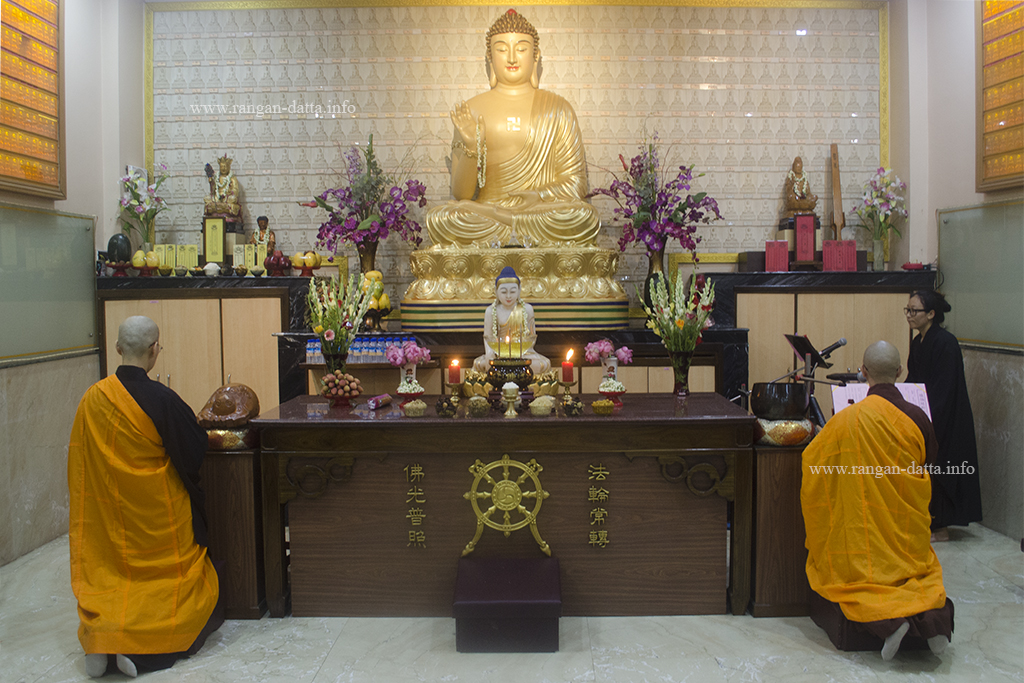
Giant Buddha, Toong On Church

Giant Buddha, Toong On Church

After several protest from the Indian Chinese Association the Kolkata Municipal Corporation (KMC) finally decided to move the newly constructed garbage vat, but till date nothing much has been done. One literally has to walk through garbage to enter the Toong On Church.

The Toong on Church has recently been at the hub of many cultural activities ranging from minority community meets to kung – fu classes. Plans are even being made to set up a museum dedicated to the history and culture of Indian Chinese. The events are being promoted through the Toong On Church Facebook page.

On April 21, 2013 I attended one such meet at the Toong On Church. The meet was chaired by Paul Chaung, the chairman of Indian Chinese Association. Local MLA Sikha Mitra, INTACH Kolkata chapter conveyor G. M. Kapur and Prof. Maria Fernandes vice chairman Minority Commission spoke on different aspects of the Calcutta (Kolkata) Chinese.

As I reached the Toong On Church I was surprised to see the entrance free of garbage. Banners hang from the building saying “Save Heritage Toong On Church from garbage.”  As I entered the building a giant Buddha statue greeted me at the ground floor. Sadly the beautiful statue probably marked the end of an era called NANKING. As I took the stairs to the first floor I found Prof. Maria Fernandes, vice chairman Minority Commission, speaking on Calcutta Chinese food. No wonder it was a strange coincidence.

Special Thanks:

  • Special thanks to Dominic Lee providing me the photo of Chinese Calligraphy of Toong On Church

Reference:

PHOTO PUBLICATION – V

PHOTO PUBLICATION – V

India in the World Economy

Tirthankar Roy

Cambridge University Press

India in World Economy: Cover

India in World Economy: Cover

Six of my photos have been published in the book titled “India in the World Economy” by Prof. Tirthankar Roy, reader in the Economic History Department of the London School of Economics and Political Science (LSE). The book have been published by the Cambridge University Press.

My photos covered a wide range of topics from terracotta temples to close up of terracotta panels, showing ocean going ships and European soldiers. From closed down Chinese restaurant and temples in Calcutta (Kolkata) to abandoned light house at the mouth of the Hooghly. Prof. Tirthankar Roy also provided me with an elaborate testimonial.

All my six photograph published comes with an elaborate narration which was also provided be me.

Prof. Thithankar Roy also mentioned my name in the preface of the book “India in the World Economy” thanking me for the photographs he has used in his book and also mentioning about my impressive collection of photographs on historical sites of West Bengal.

Second page of Preface, India in World Economy

Second page of Preface, India in World Economy

Terracotta Panel of Ship

Rajrajeshwar Temple, Darhawta, Hooghly

Terracotta panel of Ship, Rajrajeshwar Temple, Darhawta

Terracotta panel of Ship, Rajrajeshwar Temple, Darhawta

Most of the 18th century terracotta temples were constructed by merchants who made huge profits by trading with the British East India Company. So it is quiet obvious that boats and ships were integral part of the their temple decorations.

Many of this temples contain elaborate terracotta panels of boats and ships. The Rajrajeshwar Temple of Darhawta, in the Jangipara region of Hooghly district, is one such example. The Rajrajeshwar Temple was constructed in 1728 by Apurbamohan Singaroy. The base of the aat – chala (eight sloped roof) temple measures 24 feet by 21 feet and has a triple arched entrance. The entire front surface have intricate terracotta, but sadly most of these panels have been heavily damaged.

The base panels consists of images of boats and ships. The images  consists of merchants trading in exclusively decorated country boats and huge ocean going ships with European soldiers.

Photo Caption:

Terracotta panel on a Bengal Temple (Darhatwa) showing a ship, possibly of Indian construction.

Terracotta Panel of European Soldiers

Radhagobinda Temple, Aatpur (Antpur), Hooghly

Terracotta Panel of European Soldiers, Radhagobinda Temple, Aatpur, Hooghly

Terracotta Panel of European Soldiers, Radhagobinda Temple, Aatpur, Hooghly

Built in 1786 Krishnaram Mitra, the Dewan of Maharaja of Burdwan, constructed the huge Radhagobinda Temple. The towering aat – chala temple has a triple arched entrance and the entire front face is covered with the finest terracotta.

The temple was constructed during an important transition period of Bengal history. This period marked the end of Muslim rule and the beginning of European era. The terracotta panels reflect this transition. Apart from traditional panels showing images of Gods & Goddesses, scenes from Ramayana & Krishnalila it also houses a vast number of panels showing European lifestyles. European soldiers with bayonet mounted guns and firing cannons are frequently spotted on the walls of the temple. Hunting scenes with dogs also abundant on the walls of the temple.

Photo Caption:

Terracotta panel from an eighteenth – century temple showing a group of Europeans carrying guns. The temple, of Radha Gobindatemple of Aatpur, is located twenty miles northwest of Calcutta.

Also read Aatpur ~ A Poem in Terracotta

Abandoned Lighthouse

Kalitala, Kulpi, Diamond Harbour

Abandoned Lighthouse, Kulpi, Diamond Harbour

Abandoned Lighthouse, Kulpi, Diamond Harbour

Once large ships used to ply up and down the Hooghly. Several abandoned lighthouses along the banks of the Hooghly, in the Diamond Harbour region are mute witness to the glourious river trade of Hooghly.

Kalitala, in the kulpi region, near Daimond Harbour still houses one such abandoned lighthouse. oday the abandoned light house is reduced to half its original height and is located at the edge of the agricultural field. The light house is located quiet a distance from the Hooghly River.

With a circumference of about 10 feet the light house today towers to a height of about 25 feet and is built with bricks measuring 10.2  X 4.7 X 2.3 cubic inch. The structure lies in utter neglect and is totally overgrown with vegetation. The roots of the vegetation have embedded them deep in the structure and resulted in deep cracks stretching the entire length of the structure, it is a mystery that the structure still stands.

Caption:

Ruins of an eighteenth – century lighthouse located on the mouth of the Hooghly.

Also read Kulpi ~ Abondoned Lighthouse & Mysterious Grave

Toong On Church & Nanking Restaurant

Tiretta Bazar, Calcutta (Kolkata)

Closed down Chinese Temple and Restaurant, Tiretta Bazar, Kolkata

Closed down Chinese Temple and Restaurant, Tiretta Bazar, Kolkata

Located just off the Indian Exchange Place (Extension) and dwarfed by the towering Kolkata Telephone Kendra the beautiful two storied building once housed the Tong On Church in its first floor, while the ground floor was occupied by the famous Nanking Restaurant. Nanking Restaurant established in 1924, is considered as the oldest Chinese Restaurant in Calcutta (Kolkata).

In 1980s the Nanking Restaurant along with the Tong On Church closed its door to public due to property dispute, which continues to this day. The court order has kept the building under lock & key.

The Toong On Church today operates at Bow Street in Bou Bazar but the Nanking remains closed depriving the Calcuttans of the taste of the finest authentic Chinese food of the city.

Caption:

The brick building in the middle of the picture, which was closed because of a dispute in 1980s, is ionic to Calcutta’s Chinatown. It housed the Tong On Church on the upper floor and, on the lower floor, the Nanking Restaurant, said to be the first Chinese restaurant in the city.

Also read Chinese Temple of Tiretta Bazar and Achipur ~ Birth place of Calcutta China Town

Chinese New Year ~ Calcutta

December 31, 2011 1 comment

Chinese New Year Celebrations

~ Calcutta (Kolkata) ~

Join me on a Chinese New Year Tour on 10 Feb. For details mail at rangan_datta@yahoo.com

The Chinese settlement of Calcutta dates back to to 1780s when a trader named Tong Achew set up his sugar factory near present day Budge-Budge. The place today is known as Achipur, after Tong Achew. The Chinese soon deserted Achipur and headed for Calcutta (Kolkata), where they are presently settled in Tangra & Tiretta Bazar regions.

Red Dragon down the road

Red Dragon down the road

The Calcutta Chinese community celebrates the Chinese New Year in traditional way complete with dragon & lion dances at Tangra & Tiretta Bazar. The celebration starts several days before the new years day with stage shows set up at both Tiretta Bazar & Tangra. On the day of the Chinese New Year dragon & lion dances are held on the streets of Tiretta Bazar & Tangra.

On the Sunday after the Chinese New Year the entire Chinese community of Calcutta converges at Achipur (near Budge – Budge) to pay tribute to Tong Achew, the first Chinese settler of India.

The celebration in Calcutta (Kolkata) starts about a week before the new years day. Giant stages are set up at both Tangra & Tiretta Bazar. In Tiretta Bazar a huge stage is set up at Chattawalla Guli, the venue of famous chinese breakfast. Dragon & lion dances and various cultural programes are performed on the stage.

Lion Dance (Left: Stage, Right: Street)

Lion Dance (Left: Stage, Right: Street)

Dances are also held on the street accompanied by loud firecrackers. No Chinese festival is complete with Chinese food. Makeshift food stalls sell mouth watering sausages, dim sums and noodles.

Left: Lion Dance, Right: Dragon Dance

Left: Lion Dance, Right: Dragon Dance

On the morning of the Chinese New Year the Chinese of Calcutta assembles in the Chinese Temples of Tiretta Bazar and Tangra. Candles are lit and soon the lion and dragon dance starts in the temple compound or  in front of it.

The Lion heads for the Lettuce

The Lion heads for the Lettuce

The dancers soon make their way outside the temple making their way through the winding lanes of Calcutta’s China Town, accompanied by beating of drums and cymbles and not to mention the loud firecrackers.

The dancers make their way to different Chinese business establishment, shops, eateries and even some house hold. The lion heads out for the the piece of lettuce suspended high above. The two dancers, managing the lion, after some efforts finally get hold of the piece of lettuce containing money wrapped in red paper, decorated with Chinese calligraphy.

The entire Tiretta Bazar area comes alive as difference groups of dancers through the winding lanes going as far away as Bow Barracks. Occasionally the long dragon, managed by six dancers,  can be seen making its way through the lanes and by – lanes of Tiretta Bazar.

The situation is similar in Tangra.

Notes:

  • The photos are shot at Tiretta Bazar (2010 & 11) and Achipur (2010)
  • The Chinese New Year 2012 is scheduled on 23 Jan and is the “Year of Dragon.”

Reference from my Website & Blog:

List of my Blog entries on Calcutta (Kolkata)

CHINESE TEMPLES OF TIRETTA BAZAR

November 10, 2011 8 comments

Chinese Temple of Old Chinatown

~ Tiretta Bazar, Calcutta (Kolkata) ~

The Chinese settlement of Calcutta dates back to the late 18th century when a Chinese trader, Tong Achew settled near present day Budge Budge.
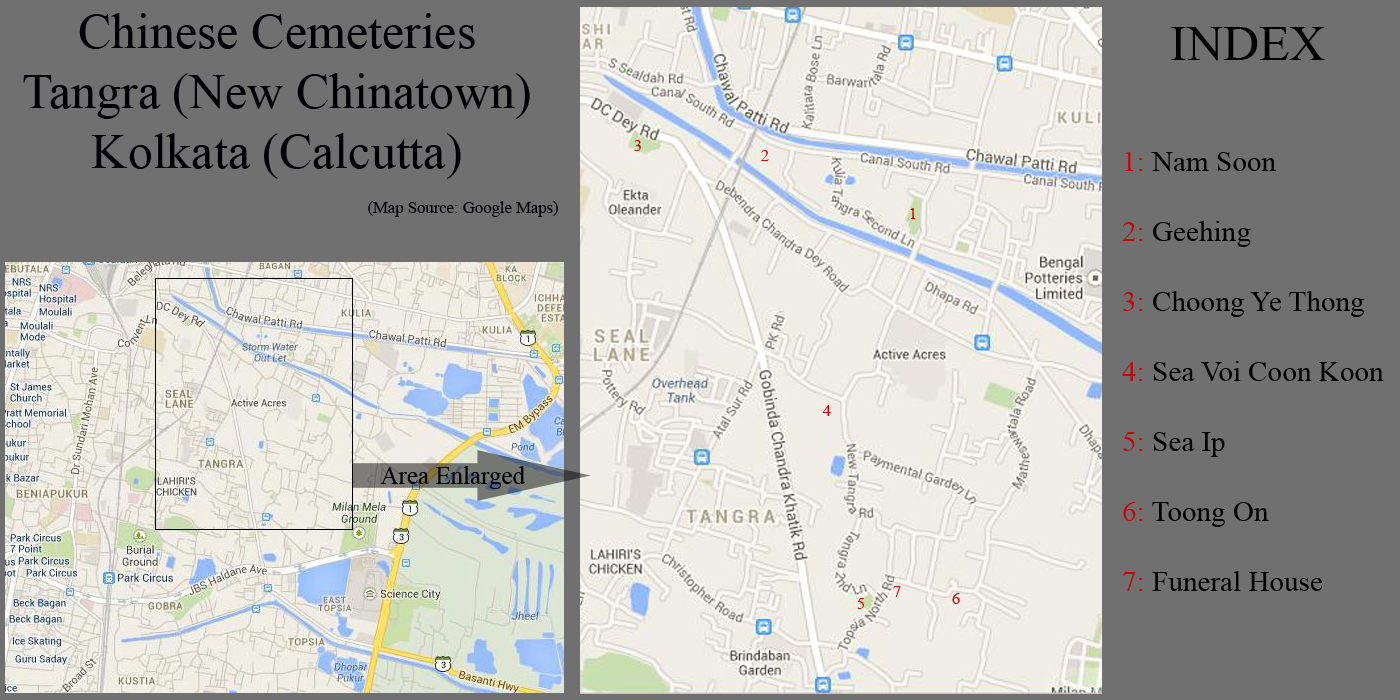
The then Governor General of India Warren Hastings offered Achew land and he set up a sugar mill complete with a sugar plantation. Achew soon brought a band of Chinese workers for his sugar project. But Achew died soon after & his mill was soon abandoned. The Chinese also deserted the place, which later came to be known as Achipur, after Achew.

Map of Tiretta Bazar

Map of Tiretta Bazar

The Chinese moved to the centre of Calcutta, where they settled in Tiretta Bazar. A market place designed by the disposed Italian architect and town planner Edward Tiretta. It was at this very place Calcutta’s (Kolkata’s) first China Town came up.

Later on a large section of Calcutta (Kolkata) Chinese moved to the Eastern part of Calcutta (Kolkata) in Tangra, to form the New China Town.

In spite of all odds Tiretta Bazar has a significant Chinese population and still has a feel of China Town. The Chinese breakfast is still available for the early-birds in the Chatawala Guli. But the star attraction of Tiretta Bazar are the six Chinese Temples (or Churches, as the Chinese calls it) hidden in the remotest o lanes of China Town.

The map (not to scale) above shows the approximate location of the six Chinese Temples of Tiretta Bazar including the site of the Chinese breakfast of Chatawalla Guli.

Sea Ip Church

Sea Ip Chinese Church

Sea Ip Chinese Church

Located on the Indian Exchange Place (Extension) and at the corner of Kolkata Improvement Trust the Sea Ip Church is the most accessible of the six Chinese Temples of Tiretta Bazar and the only one located on the main road.

Built in 1905 the Sea Ip Church is located at the centre of a truck yard and is perennially ssurround by trucks. In spite of all the chaos the temple with with red sloped roof topped with inverted porcelain fishes is bound to attract once attention.

The temple is located on the first floor of the two storied building and is dedicated to the Kwan Yin, the Goddess of war, mercy and love.

The temple also houses a set of weapons, wall & roof hanging and numerous images & statues of Chinese Gods & Goddesses.

Toong On Church

Tong On Church

Tong On Church

Located just off the Indian Exchange Place (Extension) and dwarfed by the towering Kolkata Telephone Kendra the beautiful two storied building once housed the Toong On Church in its first floor, while the ground floor was occupied by the famous Nanking Restaurant. Nanking Restaurant established in 1924, is considered as the oldest Chinese Restaurant in Calcutta (Kolkata).

In 1980s the Nanking Restaurant along with the Toong On Church closed its door to public due to property dispute, which continues to this day. The court order has kept the building under lock & key.

The Toong On Church today operates at Bow Street in Bou Bazar but the Nanking remains closed depriving the Calcuttans of the taste of the finest authentic Chinese food of the city.

The photo shows the Nanking & Toong On building shot from a under construction multi storied opposite it.

For details also see: Toong On Church, Rebirth of A Chinese Temple

Gee Hing Church

Gee Hing Church

Gee Hing Church

Gee Hing Church is located at the entry of Blackburn Lane from the India Exchange Place Extension. Located above the Chen’s Carpenterey Shop, this Chinese Temple is also very difficult to find. Also the Gee Hing Church remains closed for most of the day making it difficult to get inside.

Originally built in 1888 it was shifted to the present location of 13 Blackburn Lane in 1920. The Gee Hing Church house a framed painting of Kwan Kun, the Chinese God of the Sea. Its quiet likely that the ancient Calcutta Chinese, who reached Calcutta after a rough sea ride, worshiped the God of Sea.

The two roomed Gee Hing Church comes with the Gee Hing Club. Both the rooms are decorated with beautiful wood curved furnitures. Sadly every thing is in a run down state.

The photo shows the decorated main alter of Gee Hing Church, with beautiful metal and wood work complete with Chinese inscriptions contains the framed photo of Kwan Kun, the Chinese God of Sea.

Sea Voi Yune Leong Futh Church

Sea Voi Yune Leong Futh Church

Sea Voi Yune Leong Futh Church

Sea Voi Leong Futh Church is located in the Blackburn Lane. Built in 1908 it is the smallest but most elegant of the six Chinese Temples of Tiretta Bazar.

Although Chinese refer to Lord Buddha as Futh but the alter houses the twin Idols of some ancient Chinese Gods. The temple also houses a set of weapons, wall & roof hanging and numerous images & statues of Chinese Gods & Goddesses.

The photo shows the main alter where candles are lit by devotees.

Choonghee Dong Thien Haue Church

Built in 1859 the Choonghee Dong Thien Haue Church located at the crossing of Bamzen & Blackburn Lane. Choonghee Dong Thien Haue Church is located on the first floor of a shaby building and is extremely difficult to find.

Choonghee Dong Thien Haue Church (Left: Entrance & Right: Inside)

Choonghee Dong Thien Haue Church (Left: Entrance & Right: Inside)

It houses the idol of Kwan Kun, the Chinese God of the Sea. Its quiet likely that the ancient Calcutta Chinese, who reached Calcutta after a rough sea ride, worshiped the God of Sea.

The Chonghee Dong Thien Haue Church has two rooms housing several idols and artifacts, but sadly it is not well maintained. The beautiful Islamic styled mosaic floor has almosrt faded away.

The photos shows the entrance and themain hall of Chonghee Dong Thien Haue Church.

Nam Soon Church

Nam Soon Church

Nam Soon Church

Built in 1820 the Nam Soon Church is the oldest of the six Chinese Temples of Tiretta Bazar. Located at the end of Damzen Lane it is difficult to spot. The Nam Soon Church is also the most spacious of the Chinese Temples and contains a large courtyard.

It is hard to believe how the narrow, winding Damzen Lane opens up into a huge courtyard housing the Nam Soon Church. The Chinese temple acts as an “Oasis of Peace” in the most chaotic areas of Calcutta (Kolkata).

It house the idol of Kwan Yin, the Chinese Goddess of war, mercy and love.. The temple also houses a set of weapons, wall & roof hanging and numerous images & statues of Chinese Gods & Goddesses.

The photo shows the spacious interior of Nam Soon Church with a beautiful roof hanging. At the far end the alter at the centre house the idol of Kwan Yin. The two alters on the side houses the idols of Kwan In’s war companions.

Reference:

Jaywalkers Guide to Calcutta by Soumitra Das

Related links from my website:

Note:

  • Words of appreciation from the best selling author Amitav Ghosh

List of my Blog entries on Calcutta (Kolkata)

Achipur ~ Birth Place of Calcutta Chinatown

July 27, 2011 4 comments

Achipur

~ Birth Place of Calcutta Chinatown ~

Join me on a Chinese New Year Tour on 10 Feb. For details mail at rangan_datta@yahoo.com

In the late 18th century a Chinese tea trader by the name of Tong Achew landed on the banks of Hooghly, somewhere near present day Budge – Budge, never to return again. The then Governor General Warren Hasting granted land to Achew to set up a sugar cane plantation and sugar factory.  According to records to British East India Company “Achew was granted 650 bighas of land about 6 miles south of Budge – Budge for an annual rent of Rs 45.”

Chinese Devotees light candles, Achipur Chinese Temple

After acquiring the land Achew set up a sugar – cane plantation along with a sugar mill. He brought in a band of Chinese workers to work in his plantation and factory and thus forming the first Chinese settlement in India. But Achew died soon after and his sugar factory was abandoned. His workers left for the city of Calcutta, where their descendents still continue to live.

The place came to be known as Achipur after Tong Achew. Sadly today apart from a Chinese Temple and Achew’s horse – shoe – shaped grave Achipur has no Chinese connection. But once every year, on the Sunday after Chinese New Year, the sleepy hamlet of Achipur comes alive with the beating of Chinese drums. Possible every Chinese of Calcutta make a pilgrimage to Achipur to pay tribute to the man, who started the first Chinese settlement in India more than 230 years ago.

Tribute to Tong Achew

Located 33 km from Calcutta, Achipur can be best reached by route No. 77 bus from Esplanade. Get down at Boro Shiv Tala and walk for 10 minutes to China-man-tala, housing the Chinese temple.

As you enter the Temple you will be surrounded by hordes of Chinese offering prayers to the Chinese Deities. Candles and incense sticks are lit and the table in front of the alter is laid with an most amazing spread, ranging from whole roosted pig to chicken, from bottles of wines to heaps of fruits from exotic spices to expensive nuts. Sadly the mouth watering food is for personal consumption, so it is best to carry your own food.

The temple houses the male & female deity of Khuda & Khudi. Although distinctively Chinese in appearance their head gears are predominantly Islamic. Although legends says that the Temple was established by Achew himself, but historians doubt about its authenticity. It is quite likely that the Temple was established at a later date but the idols of Khuda & Khudi are quiet likely to be brought in by Achew himself.

Main Gate of the Achipur Temple Complex

The low ceiling of the temple has remarkable wood work and so does the pillars. The walls are filled in with excellent Chinese calligraphy. Apart from the main alter there are several prayer halls, which are lit up with candles, during the New Year celebration. Also Chinese fortune tellers make a brief business by predicting your fortune for only a couple of rupees.

Bidding farewell to the Temple head for Achew’s grave. The Horse – shoe – shaped red coloured grave overlooks the Hooghly. Here also the Chinese pays tribute by lighting candles incense sticks, to the man who started it all. It is also a place to enjoy the breeze and a senior Chinese can well narrate you the good old days of Chinese New Year celebration in Calcutta.

Gate of Achipur Chinese Temple

Even during the 1950s the Hooghly was navigable and whole vessels were chattered to bring the Chinese to Achipur. The decks consisted of food & gambling stalls and money flowed freely. The Chinese New Year in Achipur was celebrated with Dragon & Lion Dance complete with beating of hundreds of drums.

The river have long silted up, the Indian Government has imposed ban on gambling and the young Chinese are leaving Calcutta for greener pastures. Today the Dragon & Lion Dance have long stopped and the beating of drums can hardly be heard.

So if you want to experience the last of the dying culture of the Chinese of Calcutta it is best to visit Achipur on the Sunday after the Chinese New Year, which can double up as a winter Sunday picnic.

Related links from my website:

List of my Blog entry on West Bengal

Follow

Get every new post delivered to your Inbox.

Join 685 other followers